
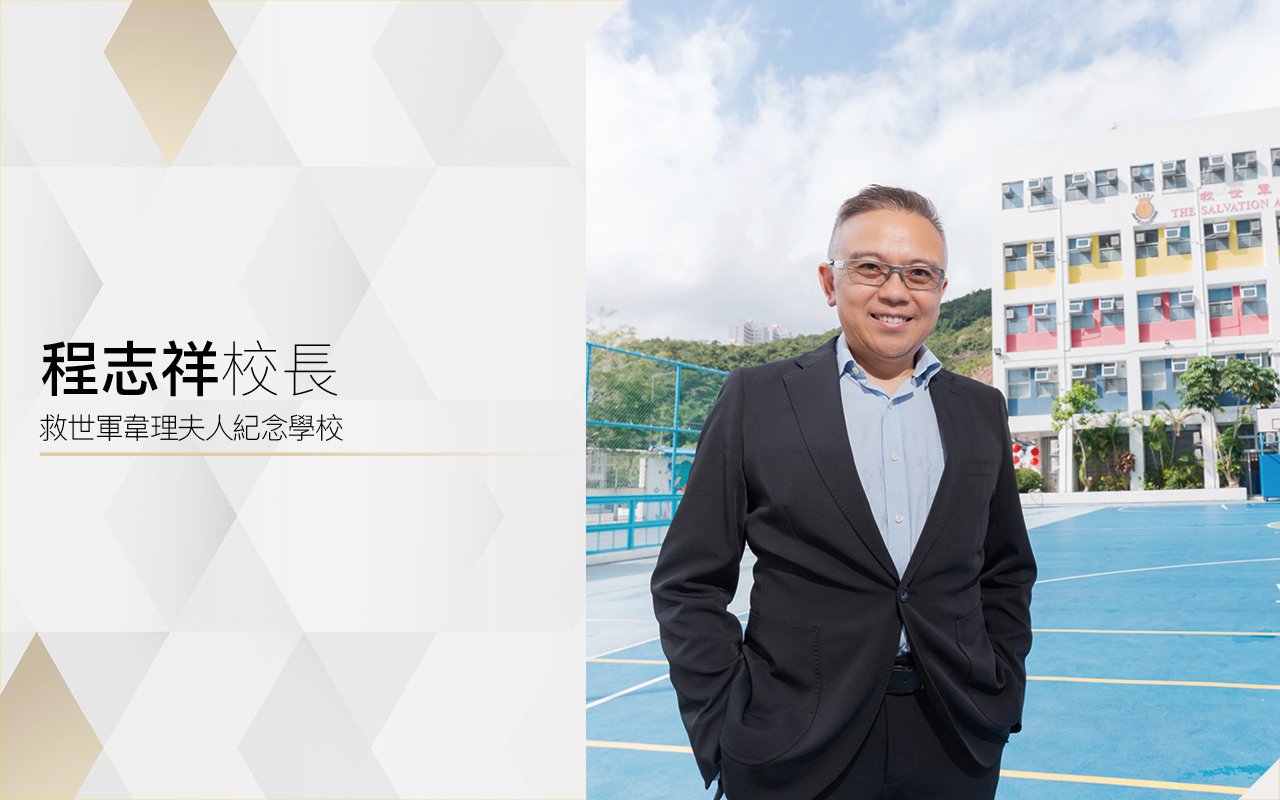
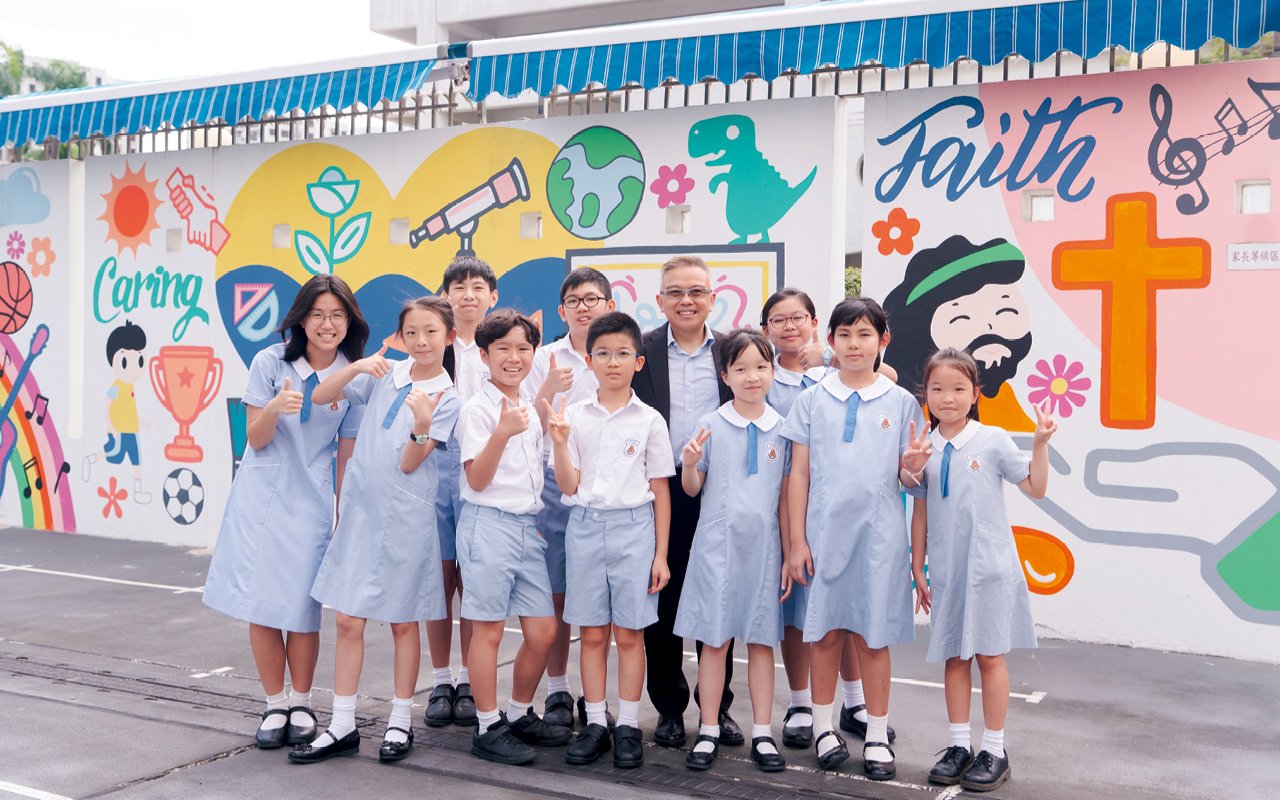
The Salvation Army Ann Wyllie Memorial School always takes "national needs" and "student development" as the core. From the pioneering promotion of digital education, to the characteristic research and development of school-based courses, to the cultivation of students' comprehensive literacy, every step embodies the love for education and expectations for the future. Principal Cheng Zhixiang has been deeply involved in the field of education for many years and has twice won the Chief Executive's Award for Excellence in Teaching. He is committed to transforming his experience in writing courses, developing teaching materials, and guiding many schools to optimize teaching into a driving force for the development of school education to meet the new requirements of the times for talent cultivation.
Digital Educational Programming Course “Trailblazers” with innovative vision
The wave of innovation and technology is sweeping the world, and digital education has become an important breakthrough in educational reform. Based on this, the school took the lead in developing a unique set of digital education programming courses. Its core advantage lies in breaking through the limitations of conventional courses on the market and truly realizing the leap from "experience technology" to "creation technology". Principal Cheng pointed out: "Nowadays, large language models (LLM) are widely used, and the function of generating patterns makes students full of curiosity, but they often stop at the "experience" level, making it difficult to deeply understand the knowledge logic behind it." To this end, the school designed a programming teaching plan that is connected to large language models such as DeepSeek. Students do not need to learn complex Python language. They only need to expand on the Scratch they have mastered to build more optimized programming projects.
What is gratifying is that some students have successfully developed the school's exclusive Chatbot, which can provide convenient consultation services for teachers and students after importing campus information into the system; some students have also written a subway travel inquiry program, which solves the problem of route inquiry when the official APP has not been downloaded. These practices gave students a deep understanding that technology is not just an "experience product" for entertainment, but a tool that can be controlled by themselves and used to solve practical problems. The school cultivates not only "users" who can only use other people's technologies, but "pioneers" who have innovative vision and can create independently.
Systematically deepen your English ability and control your own learning progress
English, as an international language, is an important tool for students to go global. The school has developed a special school-based English composition course "Power Writing". Through systematic teaching techniques, students are guided to start from literacy and sentence structure, and gradually learn to integrate language materials to construct their own articles. Practice has proven that this course is very effective: third-grade students can only write short essays of 20 words at first. After systematic study, it is no longer difficult to write articles of more than 100 words. By fifth and sixth grade, students can give full play to their creativity in writing, making articles both logical and contagious.
At the same time, the school has deeply integrated digital education into teaching, paying special attention to using LLM technology to cultivate students' independent learning abilities. Taking English learning as an example, the school introduced an AI-assisted learning system and set up a "Checkpoint" learning link: AI will accompany students in literacy exercises, generate detailed learning reports after completion, and push targeted vocabulary and practice content according to students' weak areas. This model not only realizes the extension of learning scenarios - students can continue personalized learning at home, but also builds exclusive "learning files" to allow students to clearly control their own learning progress.
Cultivate mathematical logic and master "draw inferences from one instance"
Mathematics is the core subject for building logical thinking and the basis for students to carry out innovative science and technology practice. To this end, the school has developed a mathematical programming course that integrates LLM technology to deepen students' understanding of mathematical logic. On the other hand, it has developed a special course and supporting exercise "Mathematics Problem Solver" to guide students to first screen keywords and effective information in the questions, then sort out the mathematical logical relationships, clarify the application scenarios of addition, subtraction, multiplication and division, and even master the dismantling methods of complex problems. After systematic training, students can not only solve problems with pen and paper proficiently, but also internalize logical thinking into "brain calculations" and quickly judge problem-solving ideas without the need for tools. This transformation from "knowledge memory" to "thinking internalization" allows students to truly master the learning ability of "drawing inferences from one example to other cases".
Activities combine value education and cooking practices the spirit of filial piety
The school also breaks the limitations of the traditional timetable and adopts the model of "basic teaching in the morning + comprehensive practice in the afternoon" to allow students to integrate knowledge. The school offers cooking courses covering grades 1 to 6, from the explanation of nutrition knowledge, to the practical application of ingredient handling and cooking skills, to the cultivation of self-care abilities (such as rationally planning the amount of ingredients, arranging cooking steps), and more importantly, the penetration of values - through the practice of "not wasting ingredients", the school allows students to understand the meaning of conservation; through the "sharing food" link, students are guided to learn to care for others.
There is a story about a fourth-grade student that deeply touched Principal Cheng: "After he learned how to make glutinous rice balls in the cooking class, he not only brought the finished product to me to share, but also innocently said, 'I want to treat my dad's dad to eat.' It was this warm moment that gave us the idea of organizing the "Old and Young Children's Day" event. The idea of "Community Feast" - students carefully prepare delicious food at school and invite their grandparents and other elders to come to school to taste it together. During the activity, we convey the concept of "filial piety" to students and let them truly understand the meaning of "filial piety" by handing the food to their elders. "
Love school, love learning and create a happy campus atmosphere
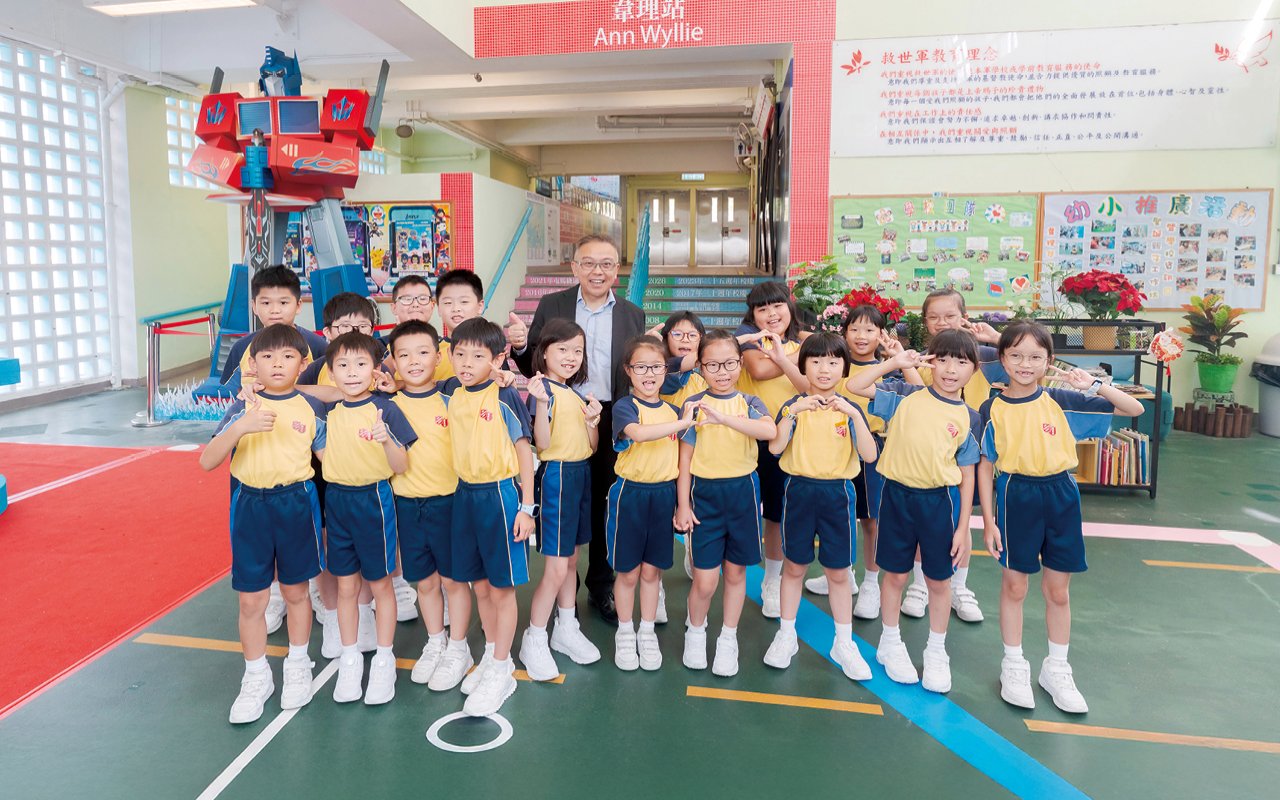
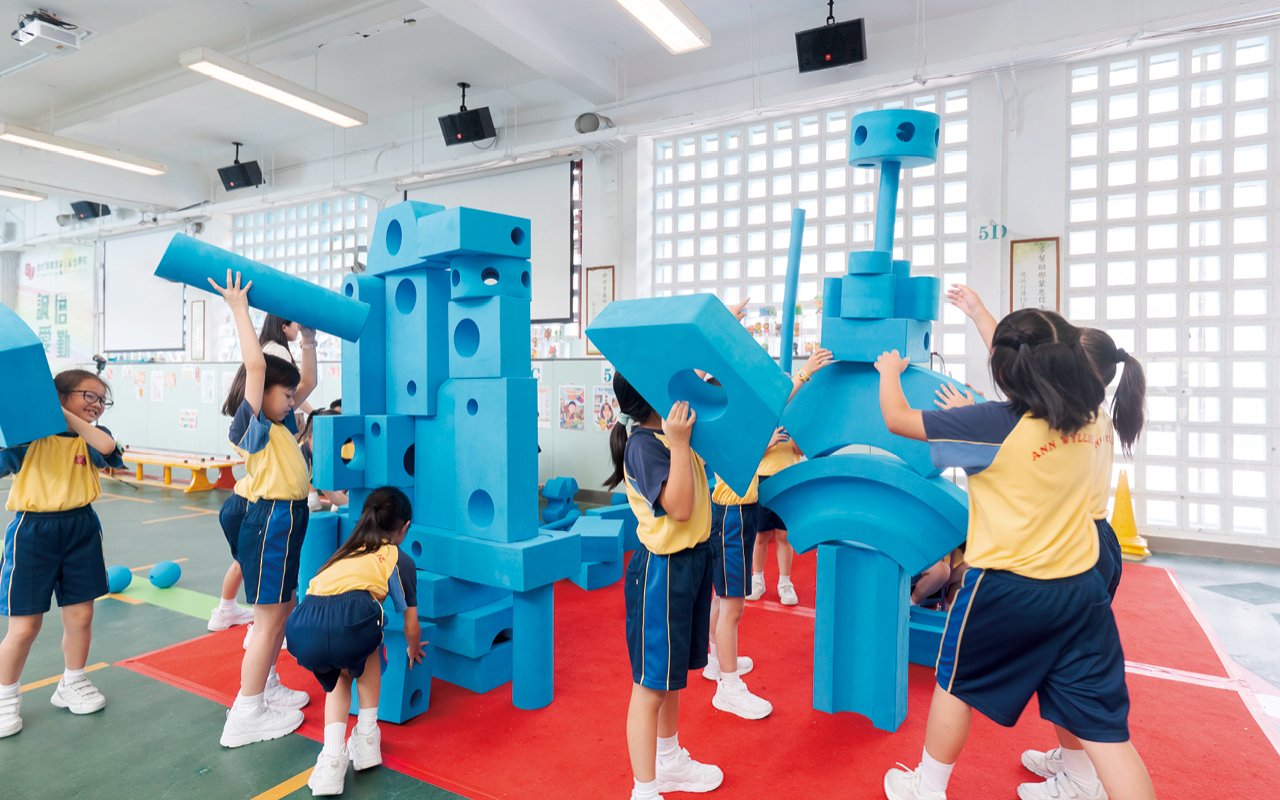
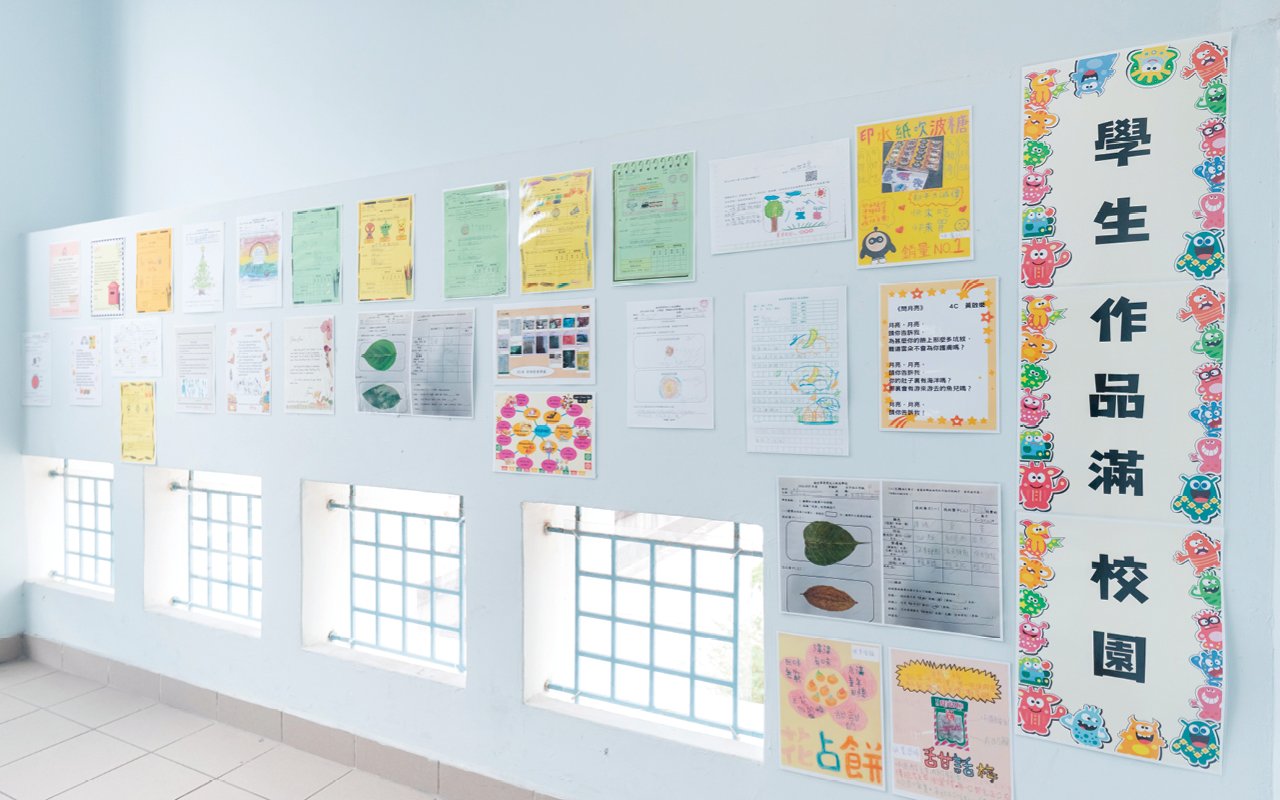
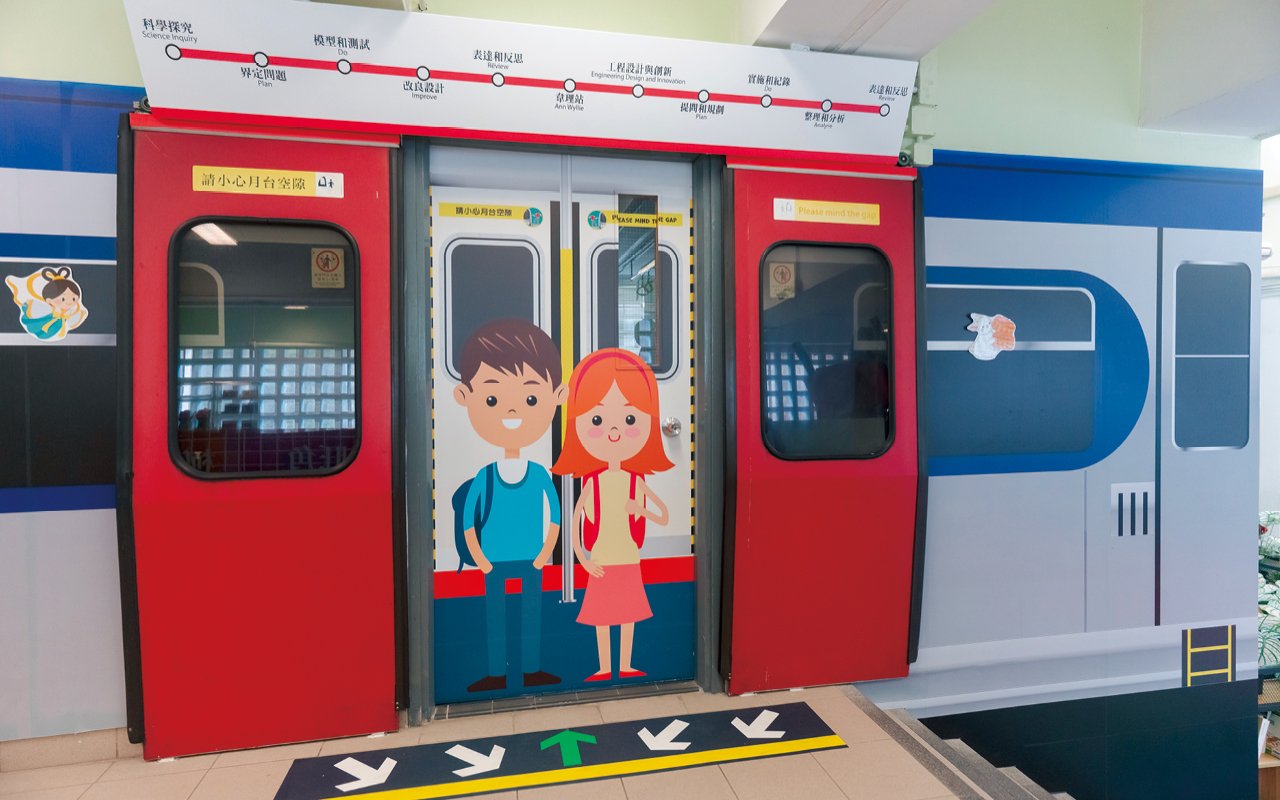
In addition to the cultivation of academic abilities, the school also attaches great importance to students' sense of belonging and happiness in the school, and firmly believes that "if you love school, you will love learning." Starting from the first grade, the school makes students feel the warmth and fun of the school through environment creation and activity design. LEGO robot dolls, simulated subway rooms and bus rooms can be seen everywhere on campus, making students feel as if they are in a familiar yet novel "paradise". A large number of student works are also displayed in the corridors and classrooms. Every painting and handmade work makes students feel that "I am a part of the school" and creates a sense of pride.
A series of special activity days to enjoy learning and grow happily
The school also designed a series of special activities to enrich students' learning experience: "No Homework Day" does not teach martial arts, but encourages parents to take leave in advance on this day to take their children to participate in high-quality parent-child activities, making the parent-child time outside of study more warm; "Reading Day" is divided into role play in books There are two forms of performance and "pajama day" - the former allows students to deeply interpret the content of the book and share their insights by playing the characters in the book; the latter allows students to come to school wearing comfortable pajamas and read and communicate in the auditorium relaxedly and comfortably, breaking the stereotype that "reading equals boring". Principal Cheng firmly believes that "selective learning is more motivational." By allowing students to independently choose the books to read and how to participate in activities, they will truly be immersed in it and experience the fun of reading in a relaxed atmosphere.
Launched "Short-term Boarding Plan" to improve self-care and communication skills
Looking to the future, the school plans to launch a "short-term boarding program" in the new school year for students in grades 4-5. Principal Cheng said: "Considering that most Hong Kong students lack collective living experience and need to improve their self-care and interpersonal skills, we cooperate with off-campus camps to arrange for students to board. In the camps, students will lead a regular collective life: complete homework, participate in group activities, Prepare dinner together, work on a regular schedule, and even watch TV to relax. This program aims to cultivate students' self-care skills, such as organizing clothes, planning time, and learning tolerance and cooperation in getting along with peers; it also allows them to build deep friendships that go beyond the classroom."
Innovation empowers education to cultivate future talents
The Salvation Army Ann Wyllie Memorial School · 2025年11月
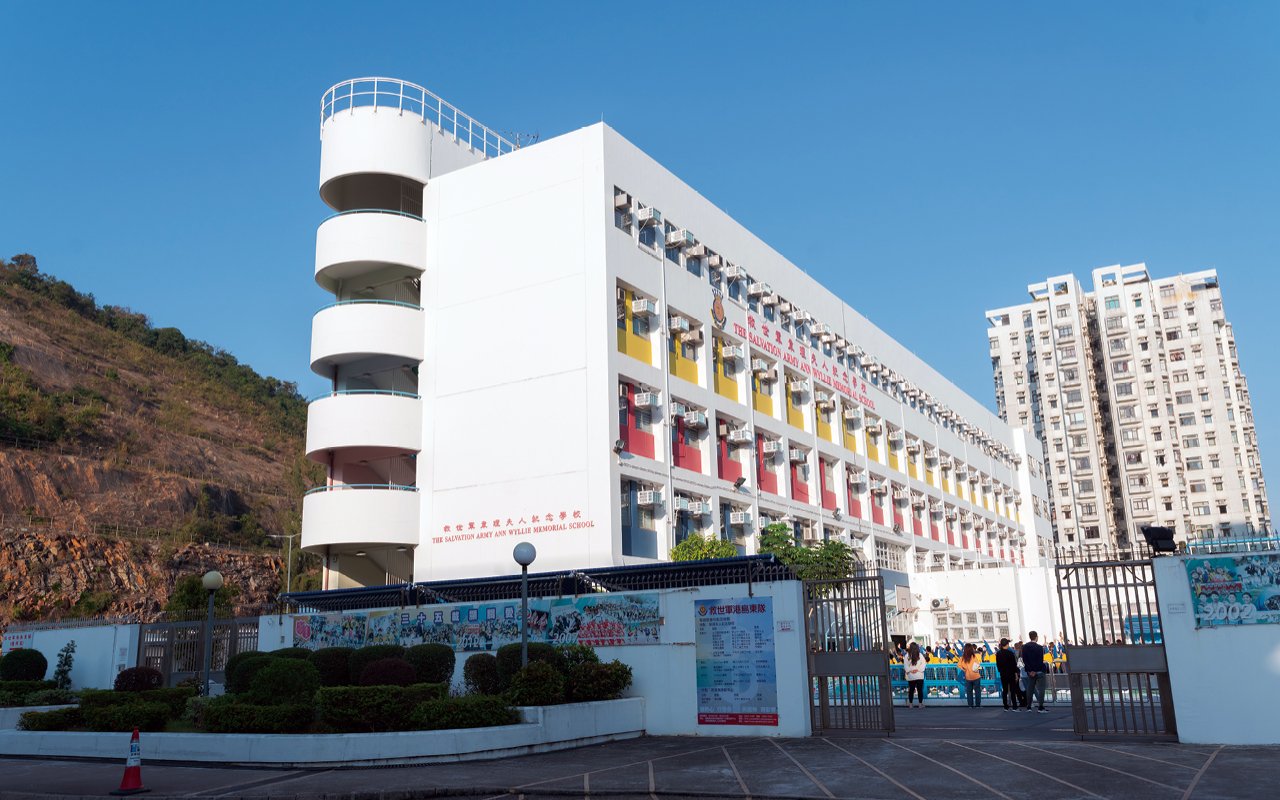
School building appearance
This English version is translated by AI. If there are inaccuracies or omissions, please refer to the original Chinese text.