
Y.C.H. Choi Hin To Primary School Over the years, we have adhered to the school spirit of "whole-person education", cultivated students' higher-order thinking development, and established positive concepts such as giving back to society, caring for and accepting others in the learning process and life experience, and becoming people who "keep pace with academics, sports and arts". In recent years, the school has been more active in innovating electronic teaching equipment and planning school-based STEAM courses to equip students for the future and lead them towards an outstanding life. Vice Principal Ye Minmei: "We use interdisciplinary courses to add hands-on elements in the classroom, so that students can experience the fun of learning knowledge and further establish an integrated view of knowledge. At the same time, we also lead them to understand natural sciences and 'learn to learn' and 'learn to live' from every thing, flower and grass in nature."
Improve campus equipment, electronic teaching "flipped classroom"
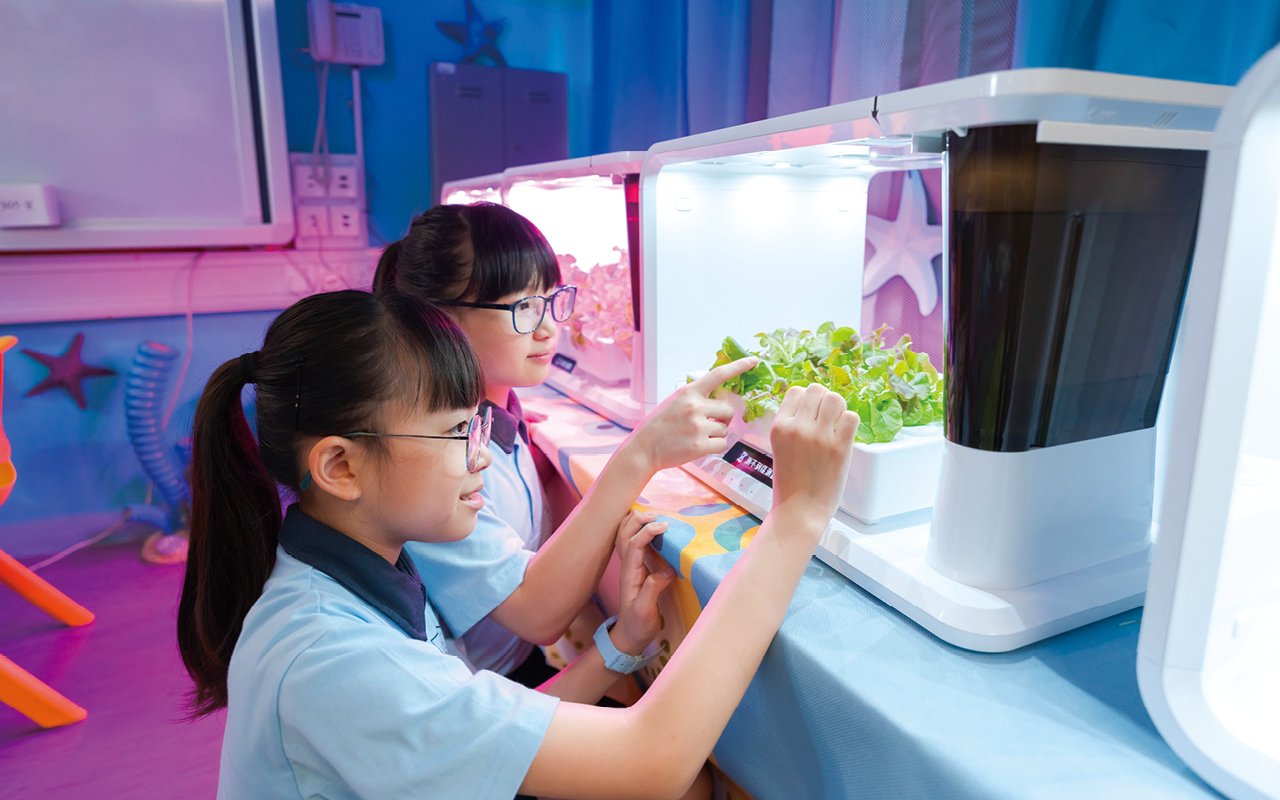
The school occupies a vast area. The campus consists of two six-story teaching buildings. It not only has sufficient activity space, but also has special rooms that closely meet teaching needs, such as "Multimedia Learning Center", "General Knowledge Room", "STEM Room", etc. The school sponsoring group firmly believes that a good learning environment can allow students to experience the joy of learning in a comfortable and convenient teaching setting, and enrich learning models, which can naturally improve the effectiveness of learning and teaching. Therefore, in recent years, the school has been optimizing on-campus teaching resources and adding electronic teaching facilities to respond to curriculum changes and improve the campus environment.
Vice Principal Ye: "In order to make the new generation more familiar with technological products and understand the impact of advanced technology and innovative industries on society, the school has implemented "BYOD electronic classes" for grades 4 to 6 in the early years, and has installed interactive TV screens in all classrooms. The course content has also been adapted to the characteristics of the subject, and different e-learning strategies have been added. Such as "flipped classroom", "interactive classroom", "real-time assessment" and "online extended learning" to encourage students to actively learn and establish the habit of e-learning. "In e-classes, teachers and students will use the Internet to watch the autumn scenery together and appreciate the beauty of words and sentences in articles to build a sense of language and improve Chinese writing skills. In addition, platforms such as "Kahoot" and "Socrative" will also be used in the classroom for interactive assessment and teaching reinforcement. Teachers also teach students to make good use of Internet search engines and online learning resources to conduct self-study and preview, allowing students to immerse themselves in the vast world of knowledge.
Establishing school-based interdisciplinary courses with diversified “hands-on” teaching
When the school designs STEAM courses, it attaches great importance to the proportion of Chinese learning. For example, junior primary school implements the English "SPARK innovative curriculum", which uses English as the main language of learning, integrates and connects English, general knowledge, visual arts and life education courses. The curriculum integrates "all-round learning" and is determined to break subject boundaries for students so that they can flexibly use subject knowledge. "Language is an important foundation for learning, so the STEAM curriculum emphasizes the development of students' biliteracy and trilingual skills, and gradually improves children's expression and reporting skills through different plans and special studies. In addition, STEAM education effectively cultivates children's multi-perspective thinking and analysis skills. To this end, we integrate STEAM education into various subject curricula and build a comprehensive, sustainable and extended knowledge system for students through cross-subject cooperation." Vice Principal Ye added.
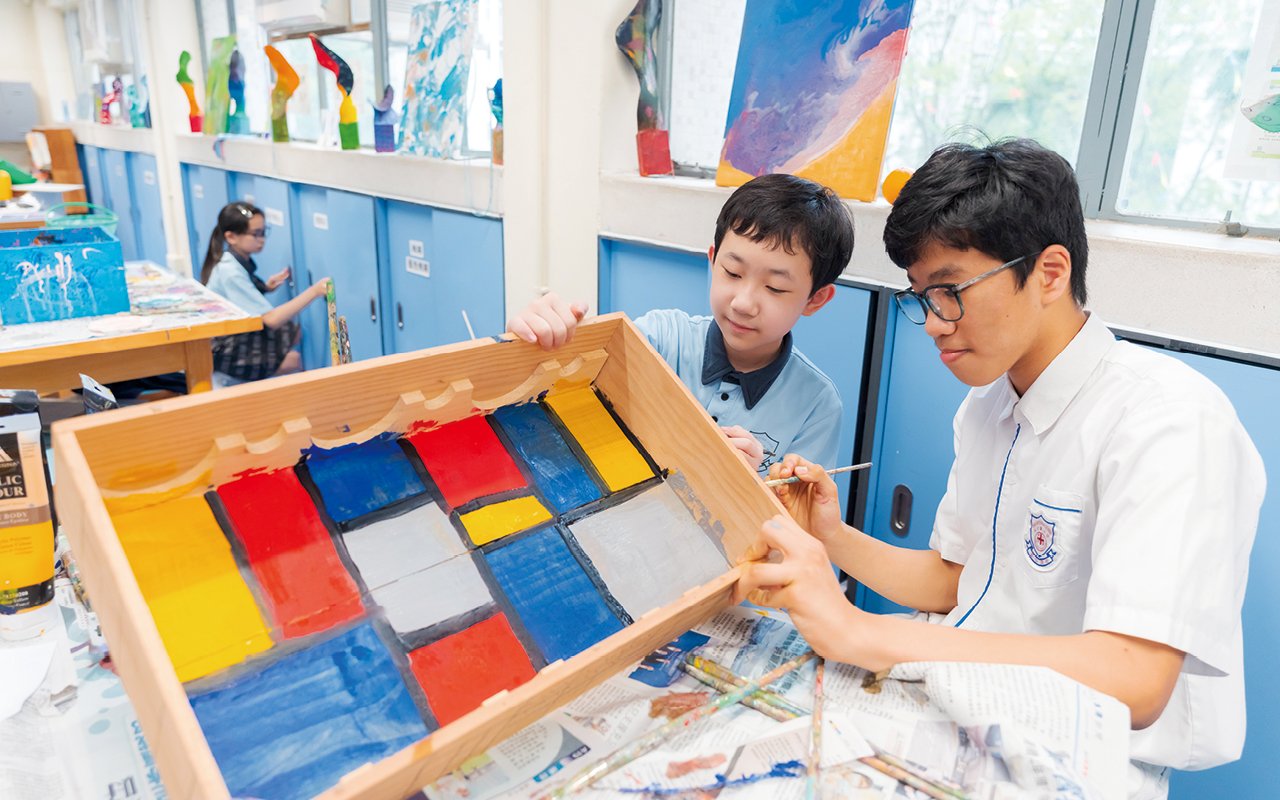
Last school year, the Visual Arts Department and the Computer Department worked together to introduce "laser cutting" technology into the fifth and sixth grade courses, allowing students to use relevant software to design and complete ideal finished products. Teacher Wu Yuanfeng, director of general knowledge, also said that the school will add a lot of "hands-on" elements to the curriculum, hoping that students can think about the common points and principles of different knowledge through practice and exploration. In addition to school-based courses, the school also provides after-school "STEAM training classes", "Coding classes", "Science Society" and other activities. It also holds the annual "STEAM Fun Day" and "Innovation Competition" every year to cultivate an atmosphere of scientific exploration on campus and encourage students to practice what they learn in the classroom and apply what they have learned.
Building an Ecological Room Life affects life
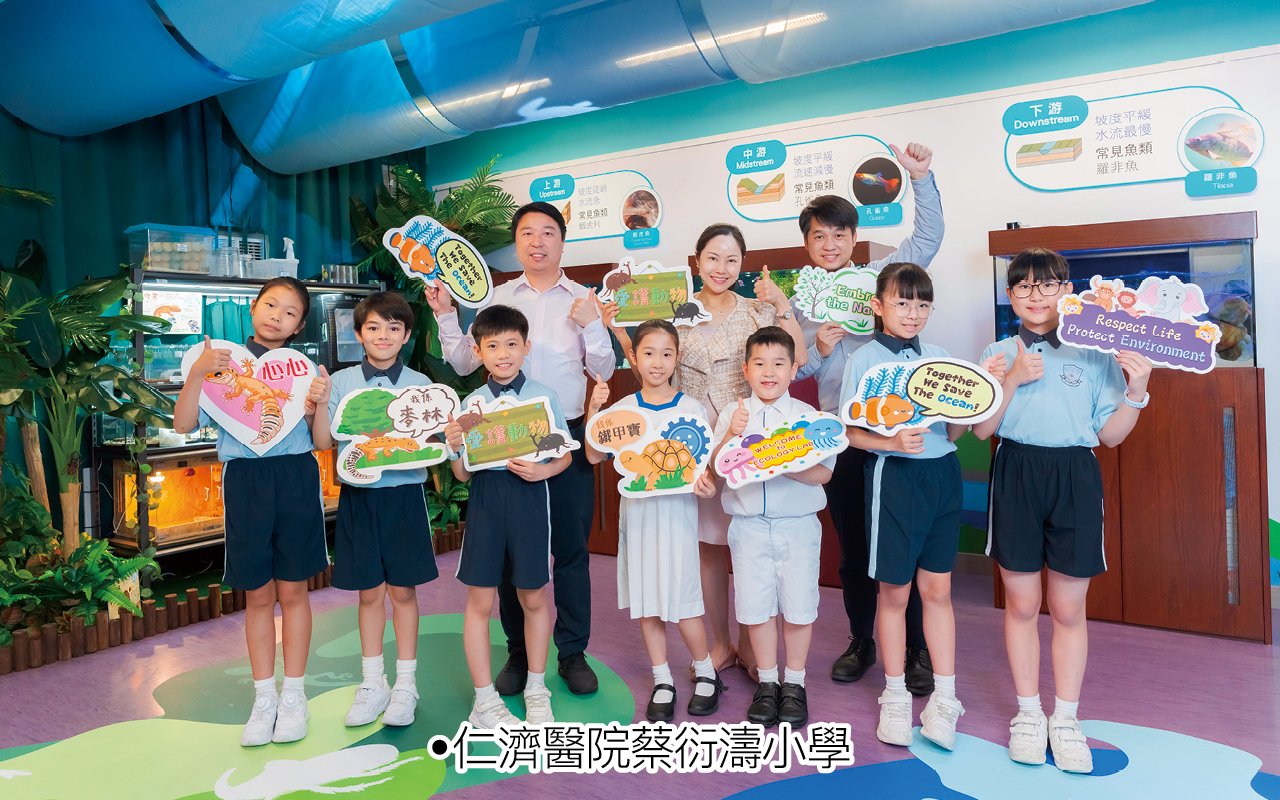
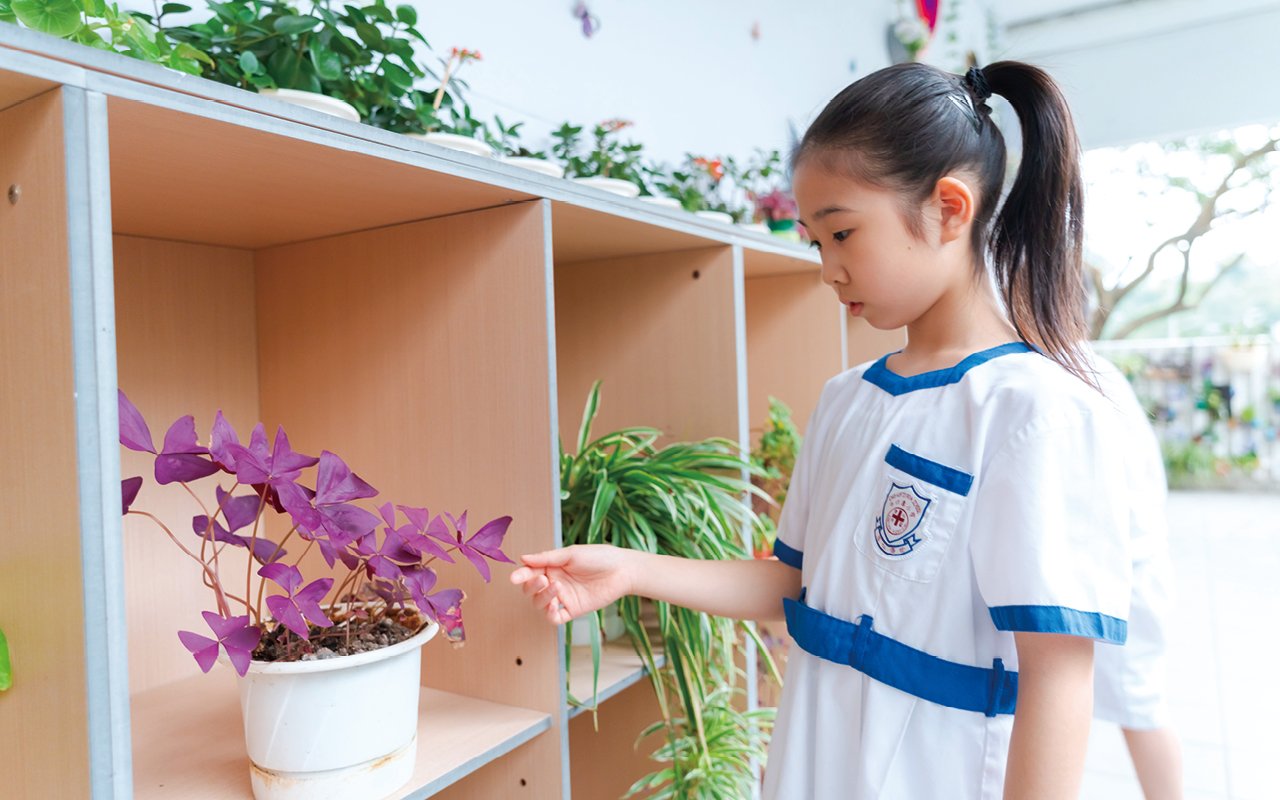
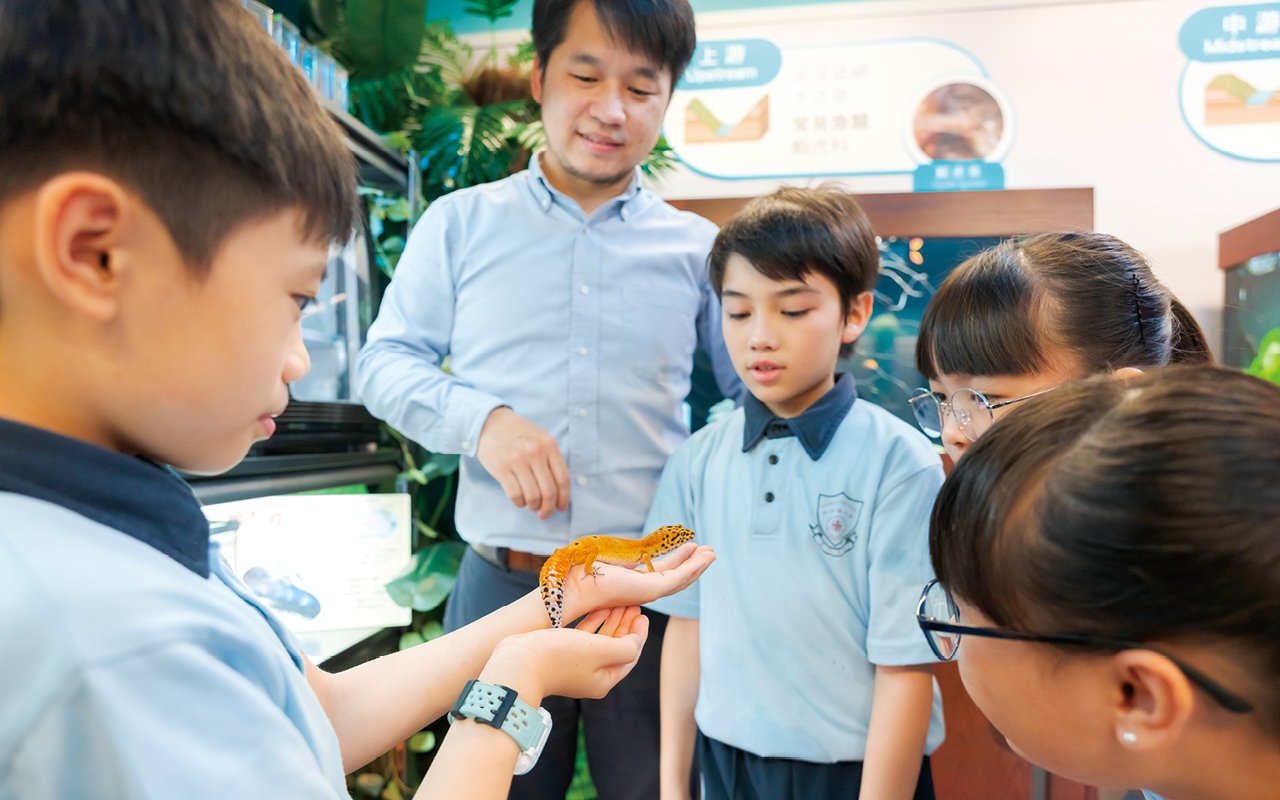
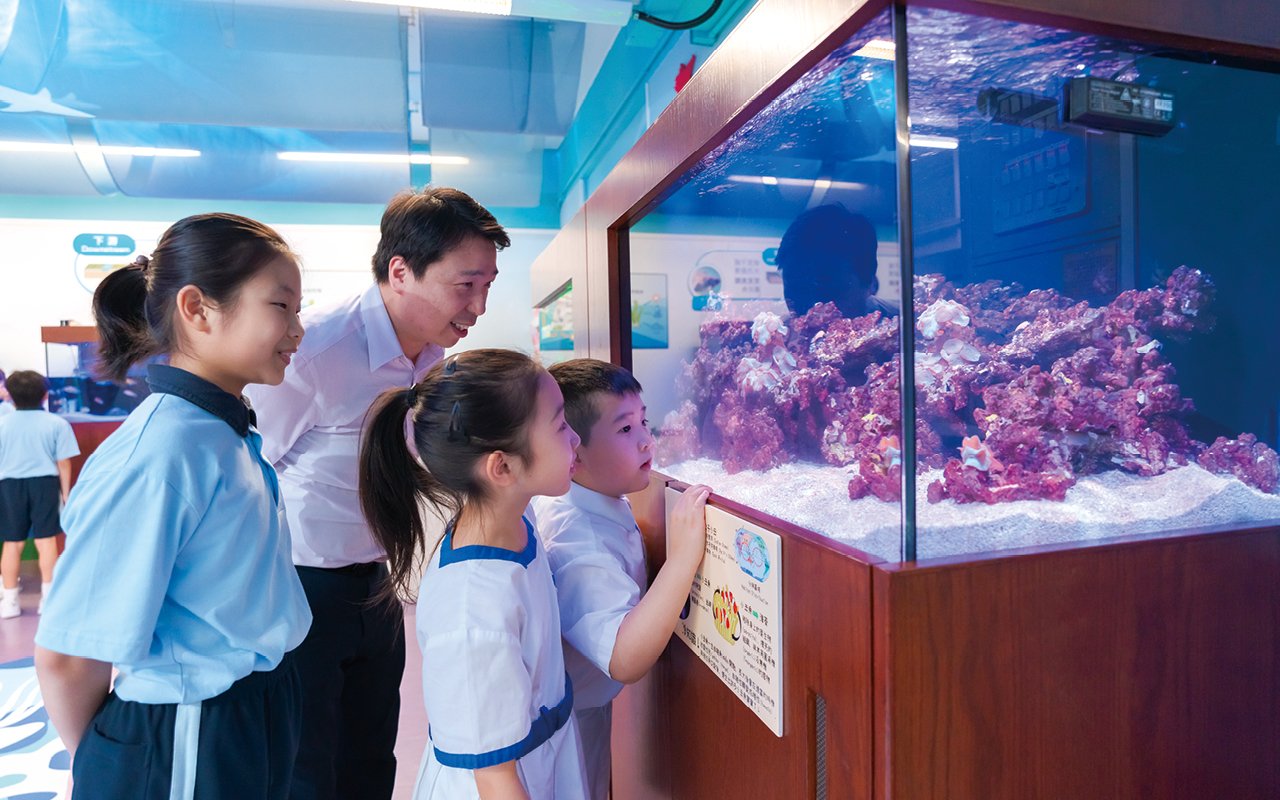
"STEAM teaching content is diverse and broad. In addition to programming and robotics, natural science is actually also an important part of the STEAM curriculum. Therefore, in the STEAM curriculum, the school tries to restore the basic steps, starting with natural science to allow students to enter the world of science. Through observation, thinking, analysis and organization of data, they can understand the origin of life, allowing children to witness life and experience the magical field of biological sciences." Teacher Wu said. Therefore, the school ushered in a new infrastructure this year - the school office converted the original classroom into an ecological room and added different equipment to create different "natural landscapes" for students. For example, it imitates the upper, middle and lower reaches of the natural Vale, allowing students to understand the water cycle and the environment and organisms in different river basins. At the same time, by raising tropical fish, turtles and different reptiles, children can personally contact and care for life, and feel the close relationship between life and science from scratch.
The advanced equipment in the room can be combined with the Internet of Things learning results of high school students, allowing students to learn programming and establish a monitoring system to detect the environmental conditions in different breeding tanks, understand the suitable living temperature and humidity of different organisms, and further collect data and use the data for analysis. Relevant teaching attaches great importance to learning from the process, so students will start raising eggs and understand the different growth stages of brine shrimp. By observing the growth of microorganisms and juvenile shrimps under the microscope, students will learn to use scientific instruments and their principles, and deeply explore the growth process of marine organisms. Teacher Lin Daiquan, director of the Computer Science Department, added: "This is children's science education, and it is also their life education. It allows them to experience the oldest and most primitive biological chain on the earth. It also allows them to understand the importance of the biological chain, learn to respect different species, and cultivate positive values."
Make good use of learning resources and protect the environment and the earth with love
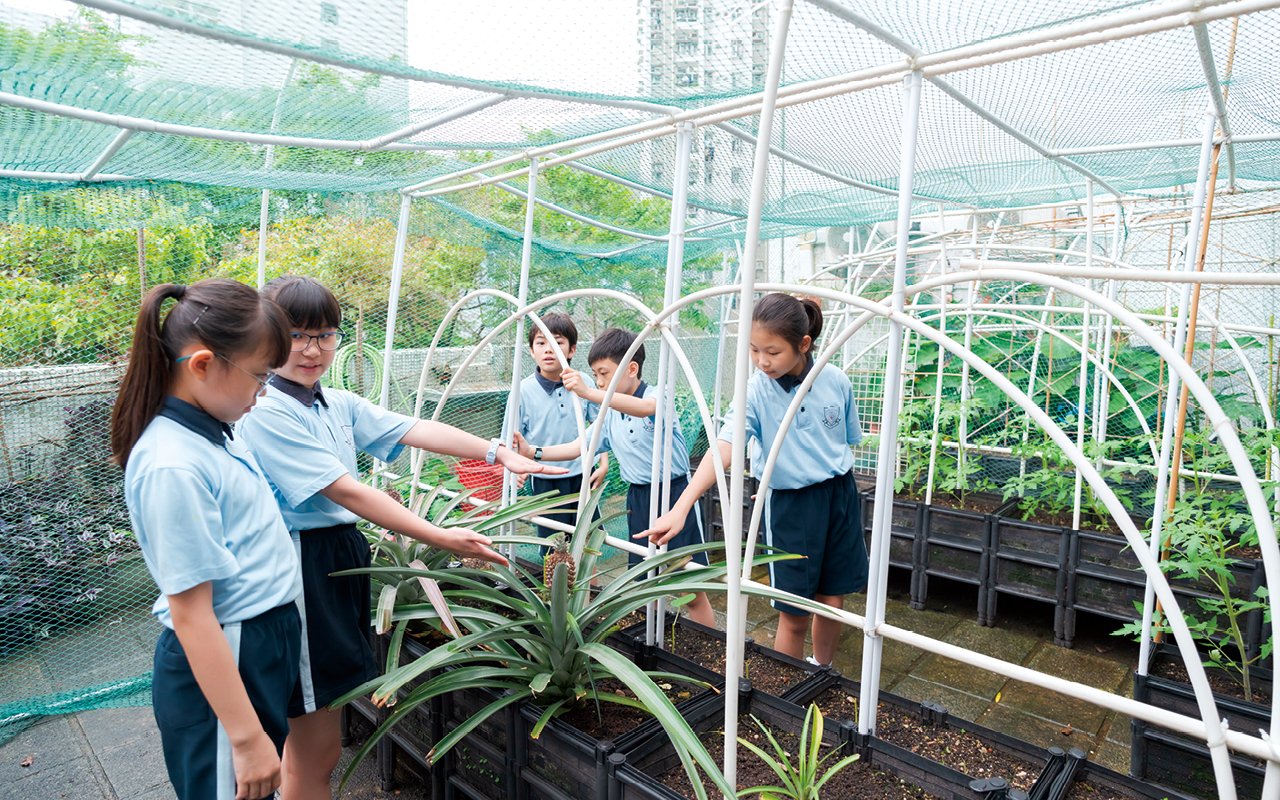
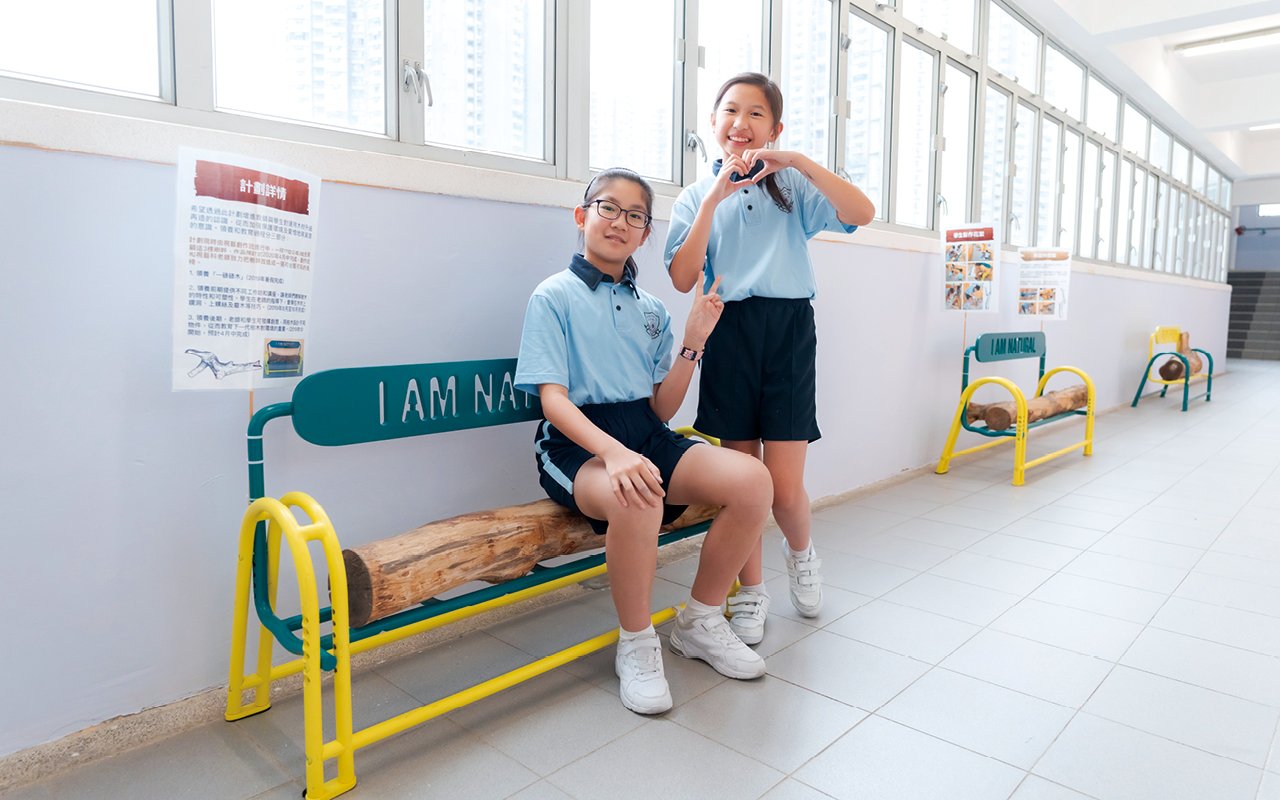
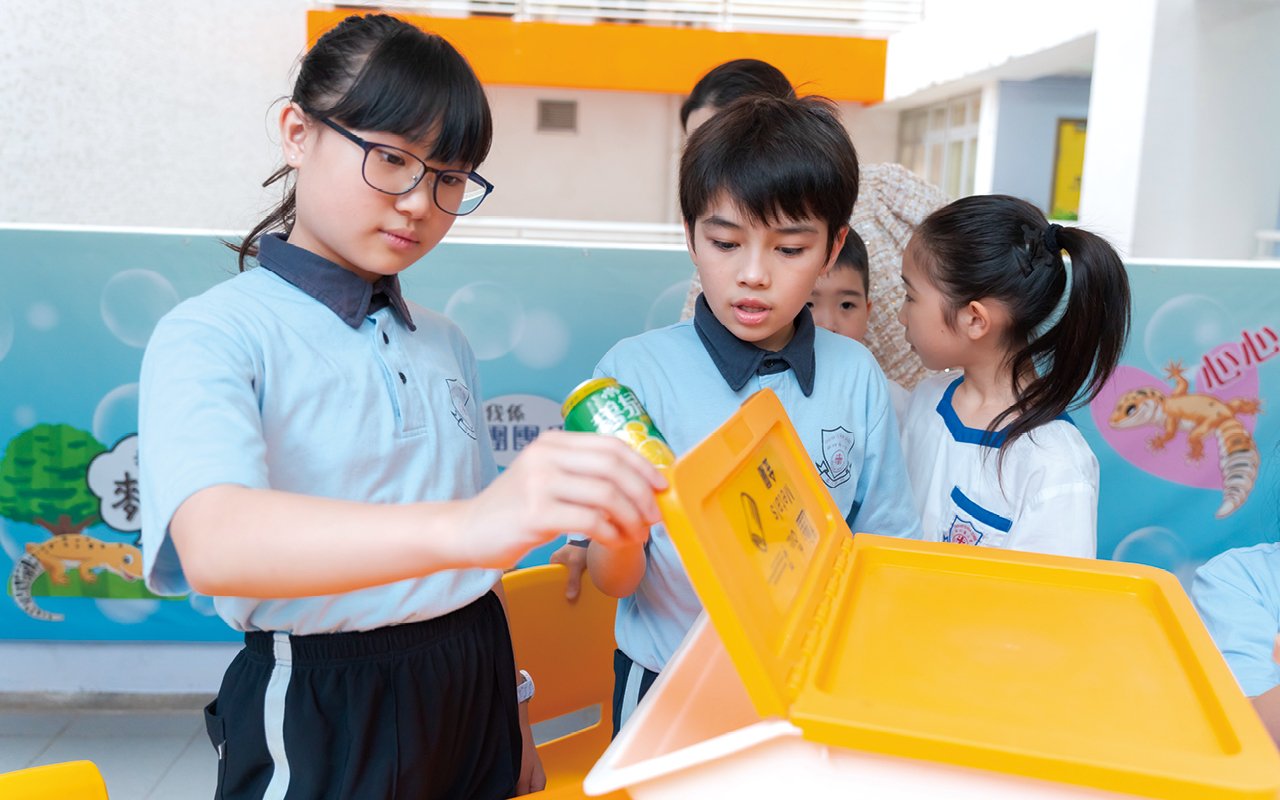
The school's facilities and curriculum are interconnected, and it actively participates in plans and activities of different organizations and charitable groups to create a different all-round learning experience for students. In order to deepen STEAM learning and establish children's good sense of social responsibility and conservation, the school vigorously promotes environmental conservation. It not only has "Environmental Ambassadors" to encourage them to classify waste during recess and lunch breaks, recycle materials, and give waste products a second life. In addition, planting activities are also held from time to time, such as "Green Garden Relaxing Garden Tour" and the school cultural day program "Various Clay Workshop". At the same time, the school launched the "School Uniform Recycling" program, hoping to promote environmental protection concepts to family education and support grassroots families to alleviate their financial difficulties. The school also uses off-campus resources - the Green 2.0 plan of the Electric Power Collection Society to install solar panels on the campus rooftop to support the development of renewable energy.
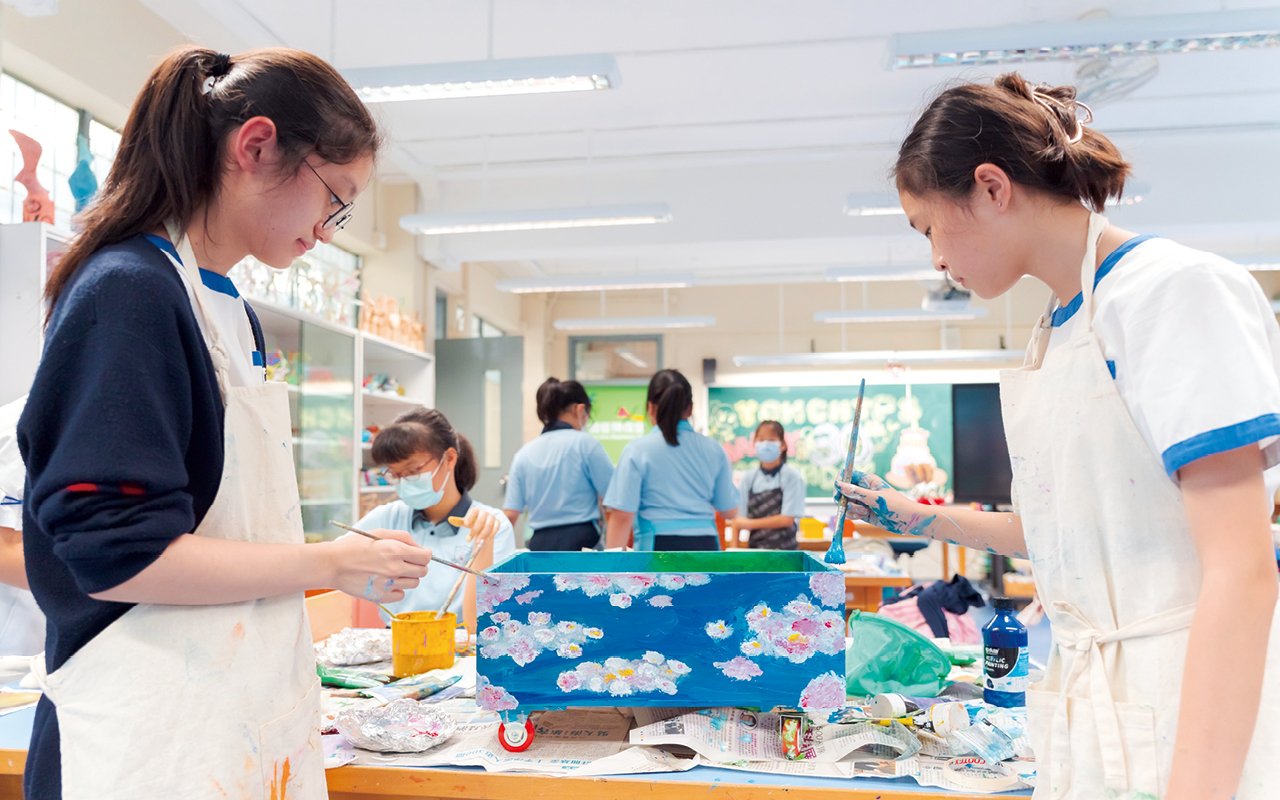
“Since the beginning of the school year last year, even under the haze of the epidemic, teachers and students of our school have still participated in more than 50 Conservation-related activities and workshops. For example, teachers and students participated in the Environmental Protection Department's "Coastal Cleanup Day" this year and went to Ting Kok, Tai Po to participate in coastal guided tours and cleaning activities. They reused the collected plastic bottles and set up workshops to design them into beautiful works of art. In addition, teachers and primary school students also participated in the activities. Students also visited the "Hong Kong Museum of Biodiversity" and "Hui Shifen Geological Museum", and some students were arranged to participate in the "Sustainable Development Series: Source of Life Activities" in Hong Kong Ocean Park, gaining valuable experience and rich marine knowledge," said teacher Chen Lihong with a smile.
Planning school-based interdisciplinary STEAM courses to explore nature and learn the way of life
Y.C.H. Choi Hin To Primary School · 2023年6月
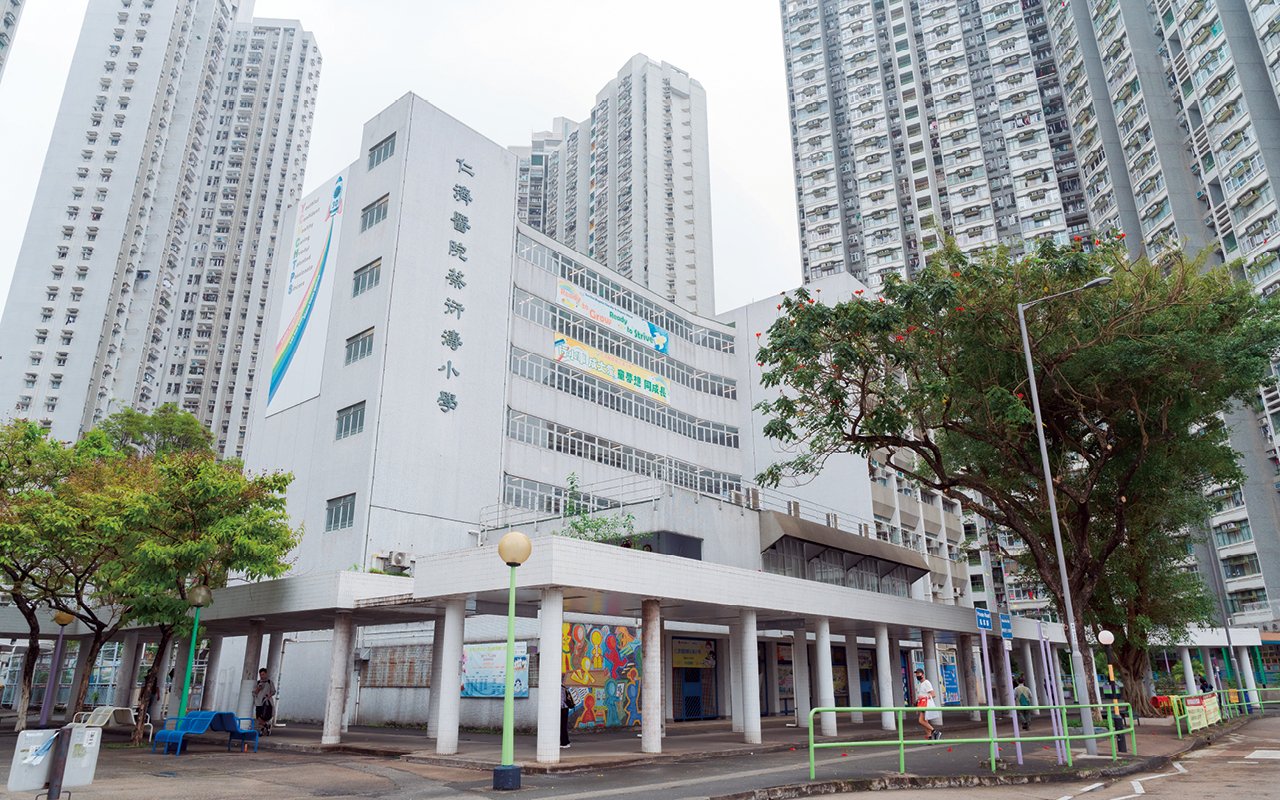
School building appearance
This English version is translated by AI. If there are inaccuracies or omissions, please refer to the original Chinese text.