
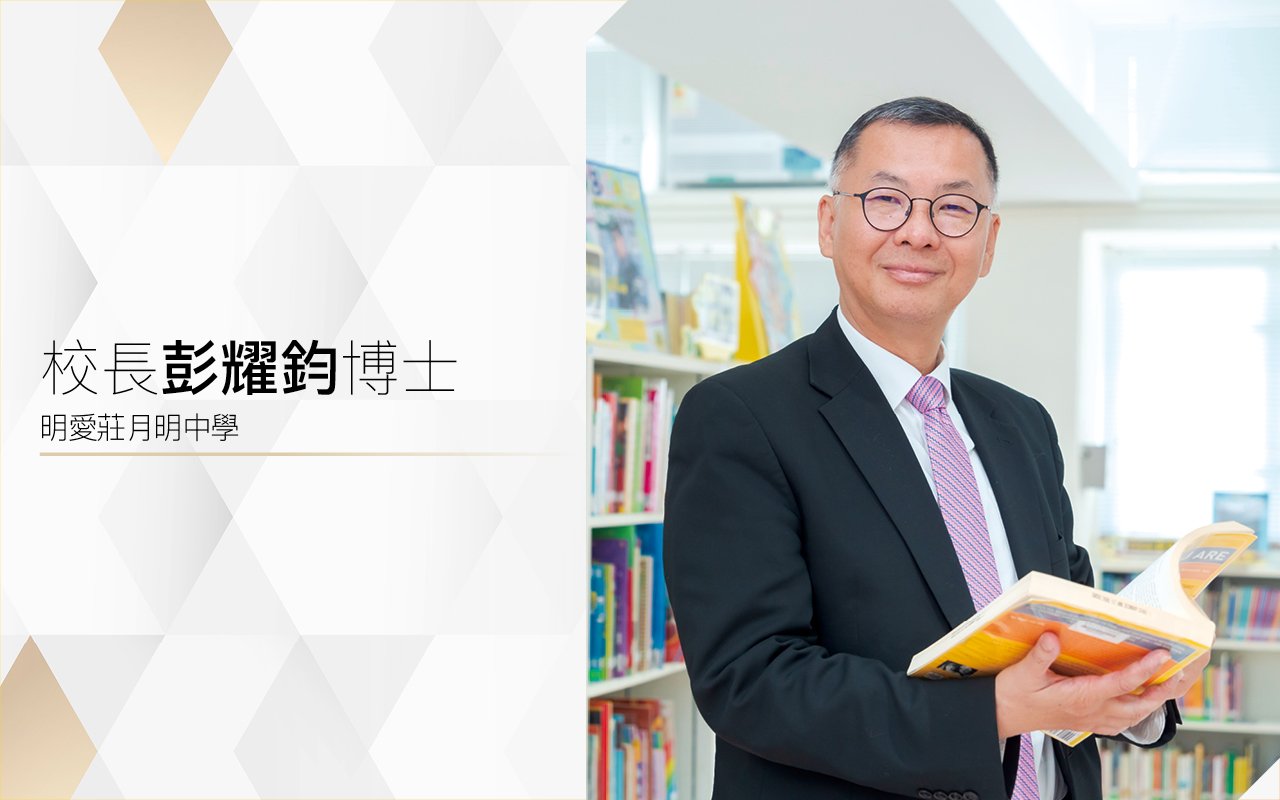
Caritas Chong Yuet Ming Secondary School is committed to implementing the goal of "student-centered" and providing high-quality education based on lifelong learning, comprehensive whole-person education and fair opportunities, so that students can become caring, active learning and leadership talents. Dr. Pang Yiu Kwan, the principal, attaches great importance to English teaching, actively provides students with a good language environment, builds a strong English learning atmosphere, improves the effectiveness of English learning in terms of curriculum planning, interdisciplinary collaboration, etc., and encourages students to use English more in daily life.
Immersive English context, diverse activity experience
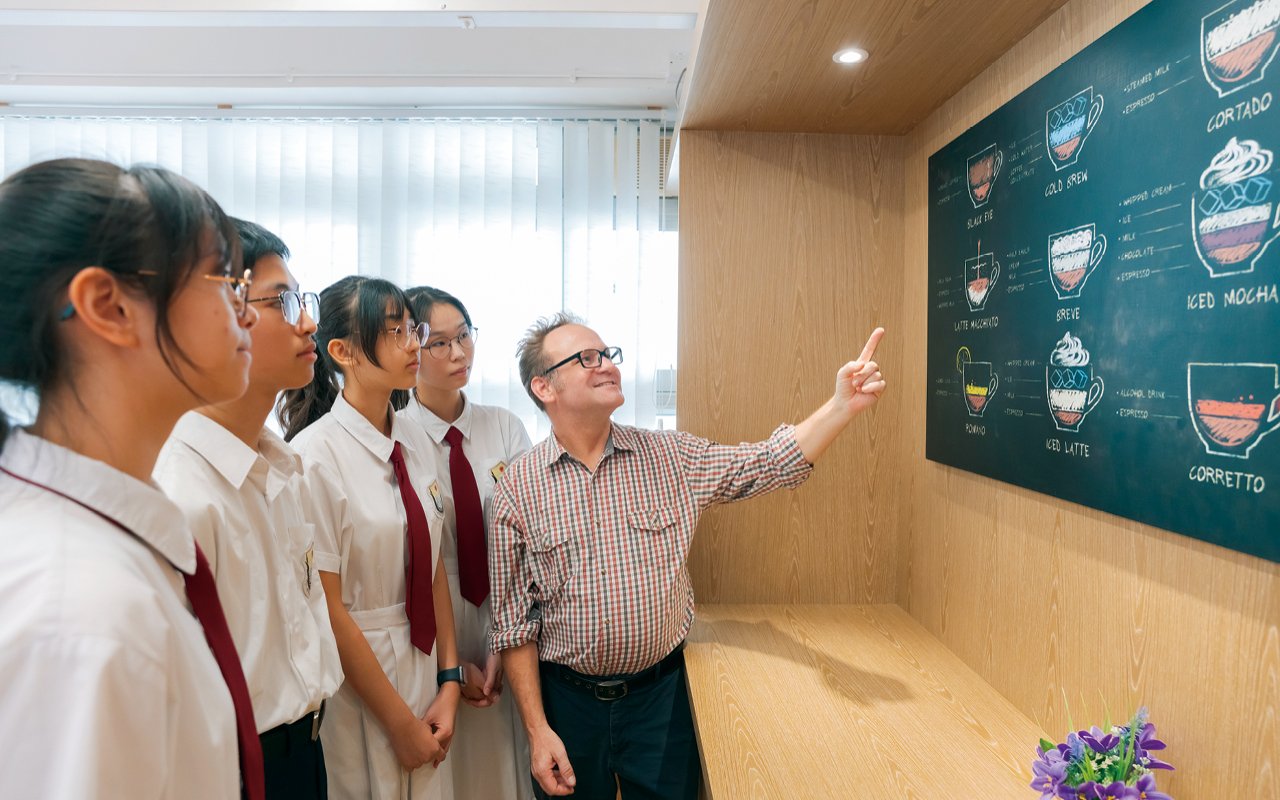
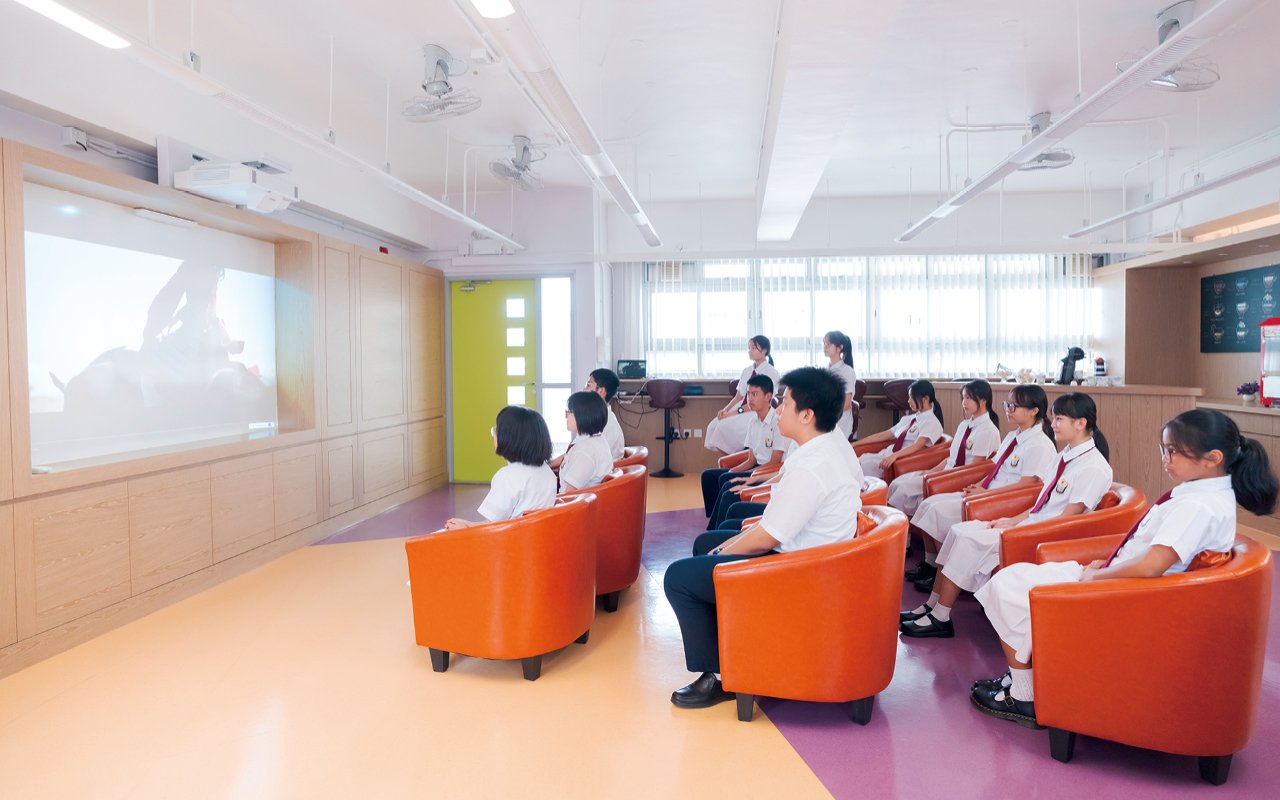
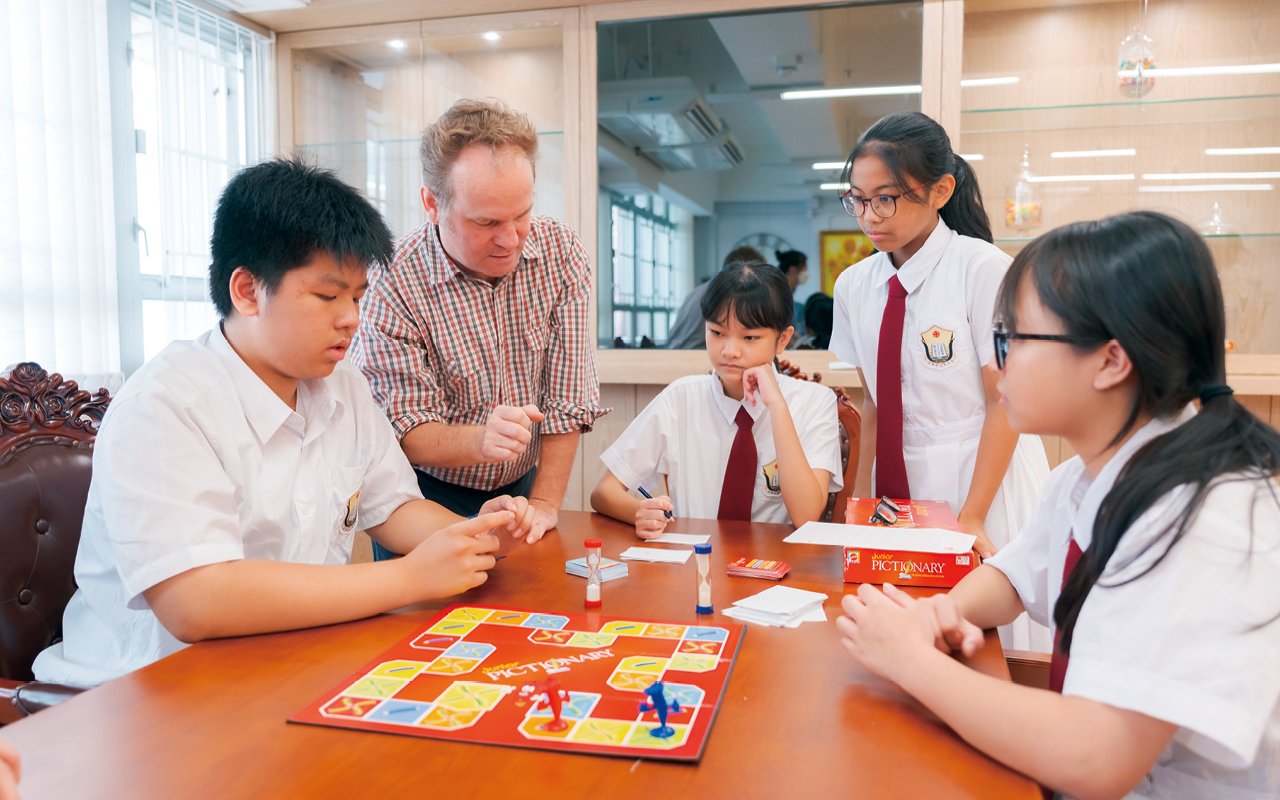
A strong English context will help encourage students to invest in English learning and use English more in daily life. For this purpose, the school has specially set up a European-style English room on campus, so that students can feel as if they are in a Western country, learn English in a natural and comfortable context, and gradually build up their confidence in English conversation. The English room has a Café, gramophone, English posters, TV screens, etc. for students to engage in English activities with different themes. Foreign English teachers will also interact with students in the English room to promote English teaching in a relaxed and interesting way.
Principal Pang Yiu Kwan said: "The school actively organizes diversified English activities, such as watching movies to learn English through entertainment; the 'Speaking English at lunch time' activity arranges foreign English teachers to introduce coffee culture to students to learn more English vocabulary; and holds the 'English Halloween Activity' so that students can immerse themselves in different English environments and atmospheres and enhance their interest in language learning." In addition, the school has also grasped the trend of information technology and made good use of innovative technology to set up VR in the STEAM Room. Cave uses virtual reality technology to design different learning scenarios for students. Students can practice corresponding English conversation topics according to various situations and improve their language application abilities.
Combining reading with independent learning to improve language usage skills
The school is committed to cultivating students' self-learning ability and becoming lifelong learners. It incorporates independent learning elements into English teaching, such as designing worksheets to allow students to pre-read relevant materials before class, so that they can have a certain understanding of the class content and improve learning efficiency. At the same time, independent learning is inseparable from reading. The school starts from curriculum planning. In junior middle school English teaching, the school teaches students different reading skills in stages to help students better connect to high school courses. The English subject team also arranges for junior high school students to read English magazines, and sets the last unit of the Form 1 English subject as a storybook reading class to help students review their reading skills and increase their ability to apply and understand knowledge.
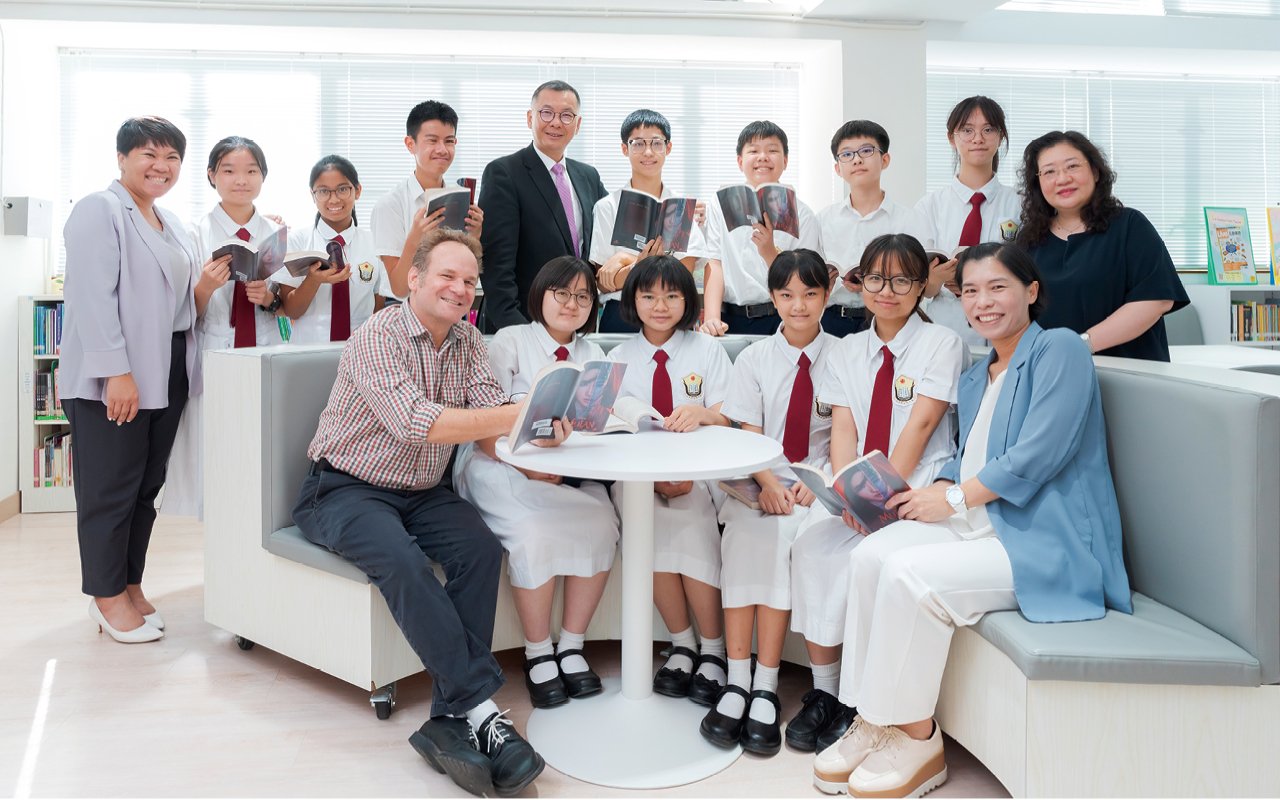
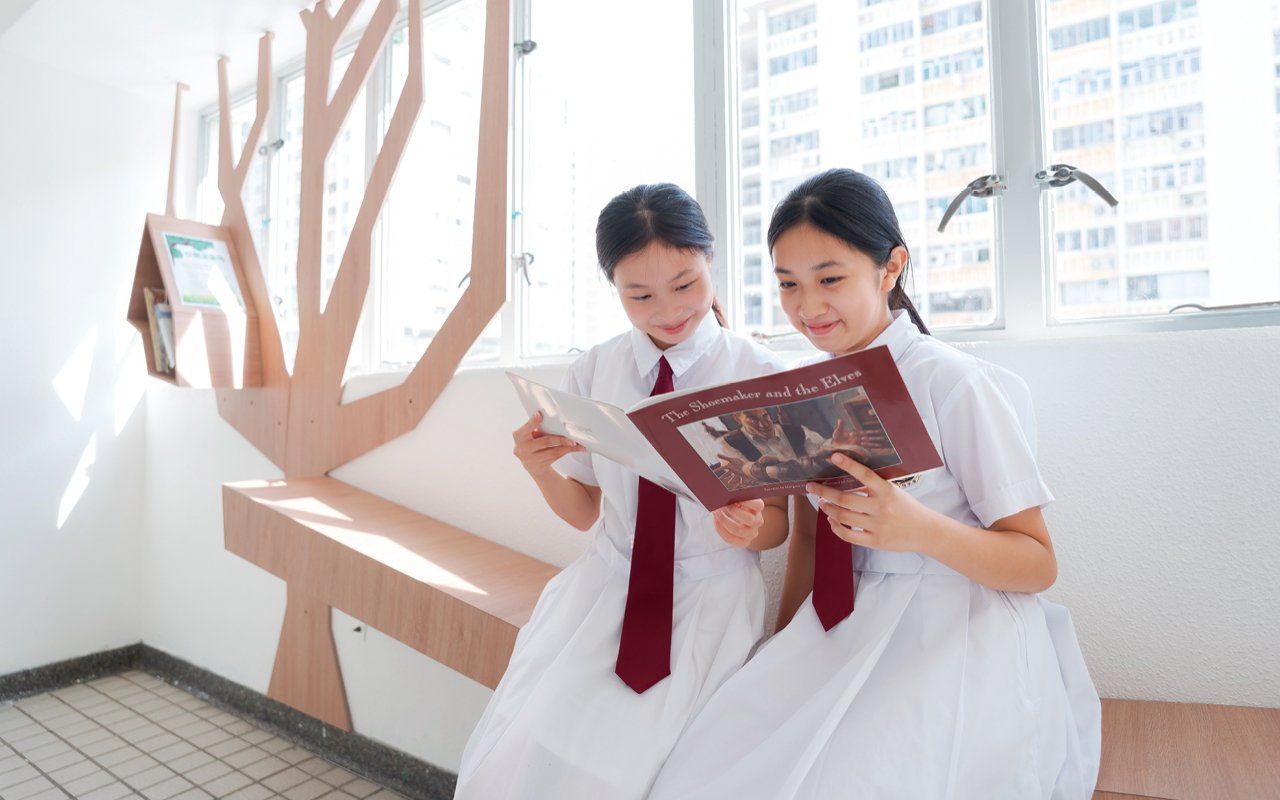
For senior students, they are asked to read English newspapers and write articles on different social issues to train their English reading and writing skills and prepare them for the HKDSE in the future. The school has also introduced different e-books and set up a "book reading corner" for students to share books, creating a strong reading atmosphere. Teacher Wu Jiawen, head of the English subject, said: "E-books are not only about learning new words through reading, but also have recording and listening functions, which can help students improve their listening, speaking, reading and writing skills. At the same time, 'Read aloud' is also an emphasis of the school, allowing students to read new words and passages aloud in class, giving them more opportunities to apply English, and thereby building up their self-confidence."
Various subject groups work together to learn different areas of English
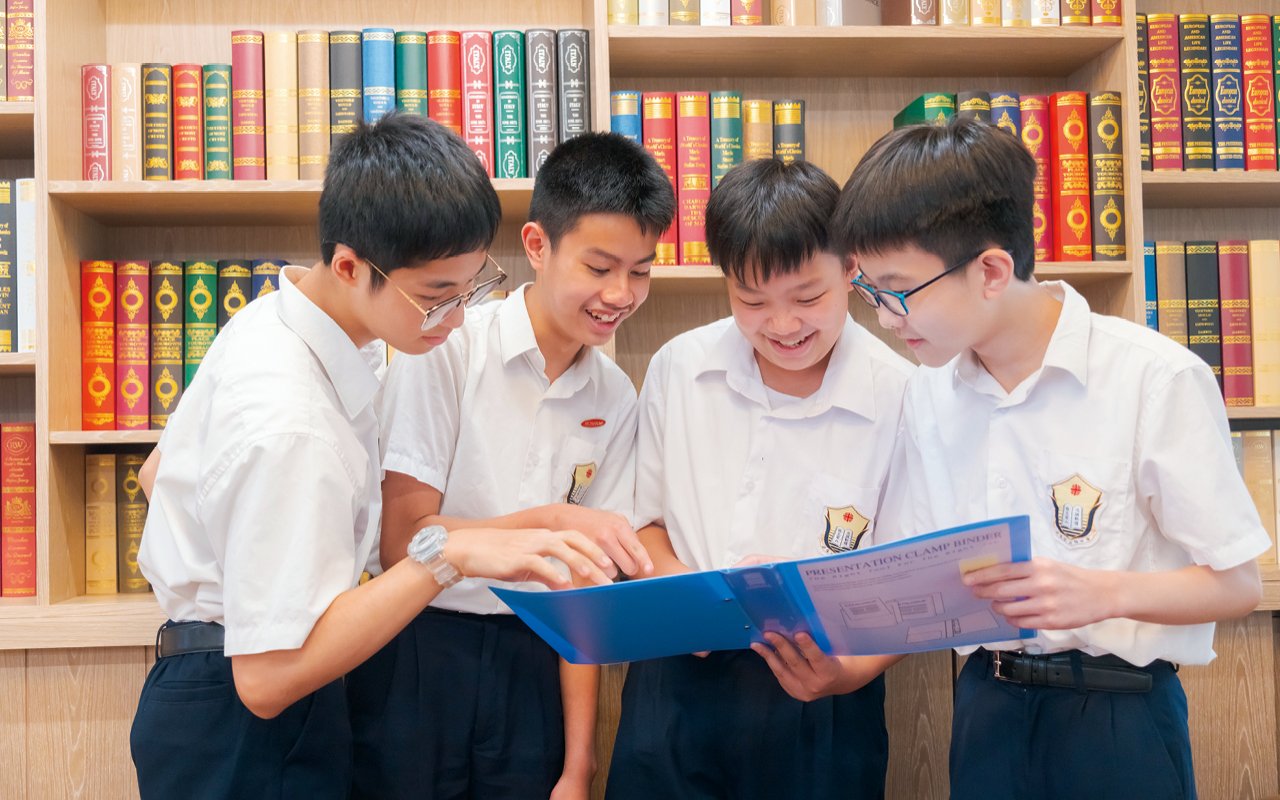
The school integrates English learning into different subjects to expose students to English in different fields. It launches "Reading across the curriculum week" to promote cross-disciplinary collaboration in subjects such as mathematics, business, geography, science, and computers. English teachers lead students to borrow books on the above subjects from the library, encouraging them to dabble in different types of books and broaden their knowledge. This year, the Comprehensive Humanities Department has added a Chinese language fine-tuning section to conduct extended English learning, arranging students to read chapters and deepen the reading skills learned in English classes. In terms of activities, the English Department, the Chinese Department and the Chinese History Department jointly organized the "Cultural Week". The English department has booth games, introductions to different festivals, Hong Kong characteristics, etc., allowing students to learn English from things they are familiar with and experience Chinese and Western cultural characteristics through activities.
"Three-dimensional teaching" teaching and learning, active thinking and common progress
Good classroom interaction can stimulate students' interest and participation, making them more focused and engaged in learning, and better understanding and absorbing knowledge. Therefore, the school adopts a "three-dimensional teaching" model, with "breadth of participation", "height of thinking" and "depth of knowledge" as the core. Through classroom design, students are provided with different thinking activities at different stages to help them improve their understanding, memory and application of knowledge to a higher level of thinking.
Assistant Principal Lin Xiulan pointed out: "We constantly mobilize students' thinking, encourage them to conduct different levels of learning processes such as synthesis, analysis, and criticism, and strive to enhance the classroom participation of all students through cooperation, discussion, reporting, etc. For example, arranging "Think pair" "share" activities create a safe and enjoyable learning environment, allowing students to have more opportunities to apply English. For students with stronger abilities, they can further develop their English skills and achieve the effect of reviewing the past and learning new things; students with less ability can also learn from their peers to promote common progress."
Integrate career planning to enhance personal competitiveness
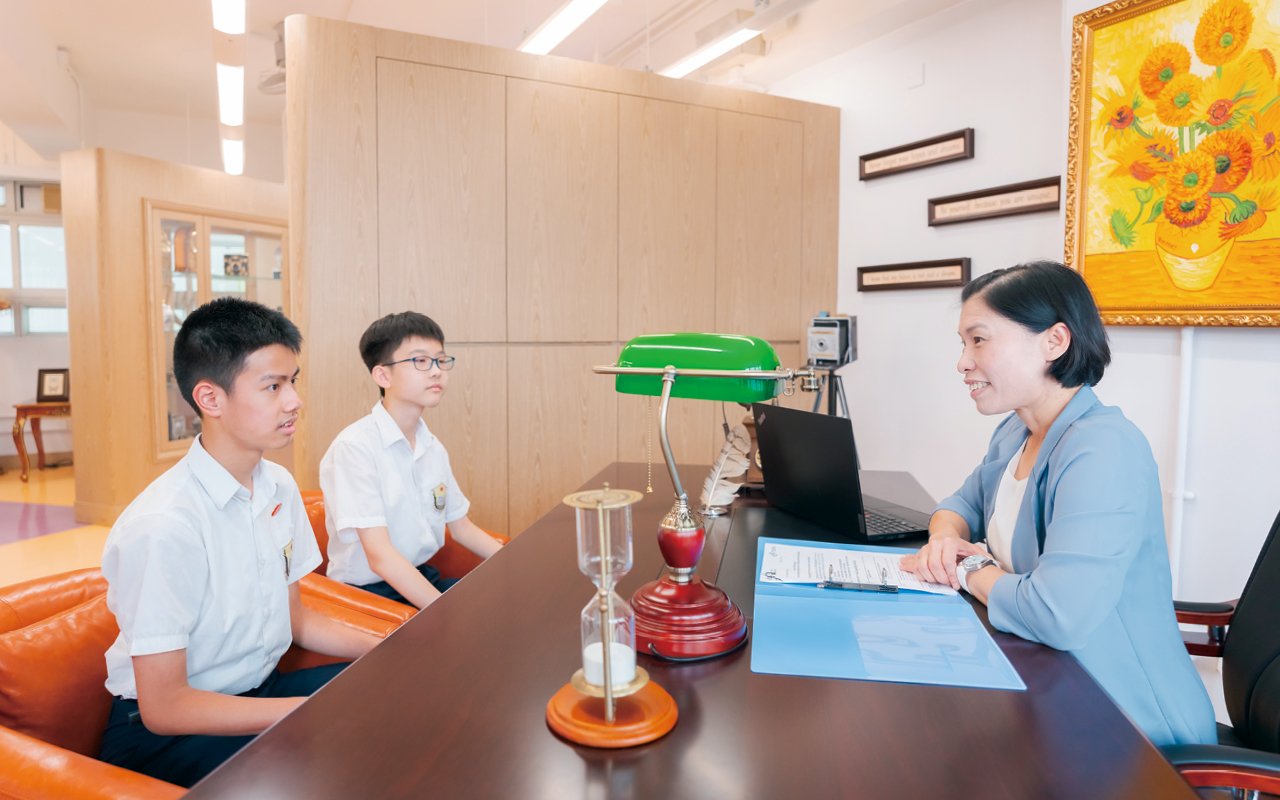
Regardless of further education or employment, good English skills will help students gain broader space for development. Therefore, the school combines English teaching and career planning and advocates the educational concept of "Learning English through workplace". It sets up an office corner in the English room to provide an English context in the workplace, teach high school students different English interview skills, and lay a solid foundation for conversation. At the same time, the English subject also adds business writing content, such as English reports, letters, etc., to teach students different practical skills in the workplace, so that they can be more comfortable in handling English work in the future and enhance their personal competitiveness.
English learning support to lay the foundation for language
Learning English is a major problem that new immigrant students encounter when studying in Hong Kong. The school has allocated additional resources to cater for their different learning needs. Assistant Principal Zheng Yuling said: "For new immigrant students, we first need to increase their interest in English, especially in English conversation, and arrange foreign teachers to create a sense of engagement in the atmosphere. The school launches English classes for new immigrants and organizes activities led by foreign teachers to provide them with early assistance and improve their English skills." The school will also provide cram schools or extended courses for local students to take care of different learning differences, provide comprehensive academic support, help junior high school students lay a foundation in English, and assist high school students to prepare for public examinations.
Strive for excellence and take teaching to a higher level
The school attaches great importance to the quality of English teaching, and specially arranges subject teachers to observe classes, and sets up joint lesson preparation time every week to share and communicate on course difficulties, teaching practices, etc., to jointly optimize teaching content, help students use English flexibly, and improve learning and teaching effectiveness. In addition, many teachers from the English subject group participate in the grading work of the public examination, so they can closely follow the grading standards of the examination. They can not only share their experience on the grading criteria and scoring guides, but also teach students examination techniques for different question types to help them prepare for the public examination in the best condition and performance. In recent years, the school has also participated in the School-based Support Program of the Education Bureau, and has carried out teaching research with the Education Bureau specialists to provide English teaching content that keeps pace with the times.
Strong language learning atmosphere to improve English application ability
Caritas Chong Yuet Ming Secondary School · 2023年12月
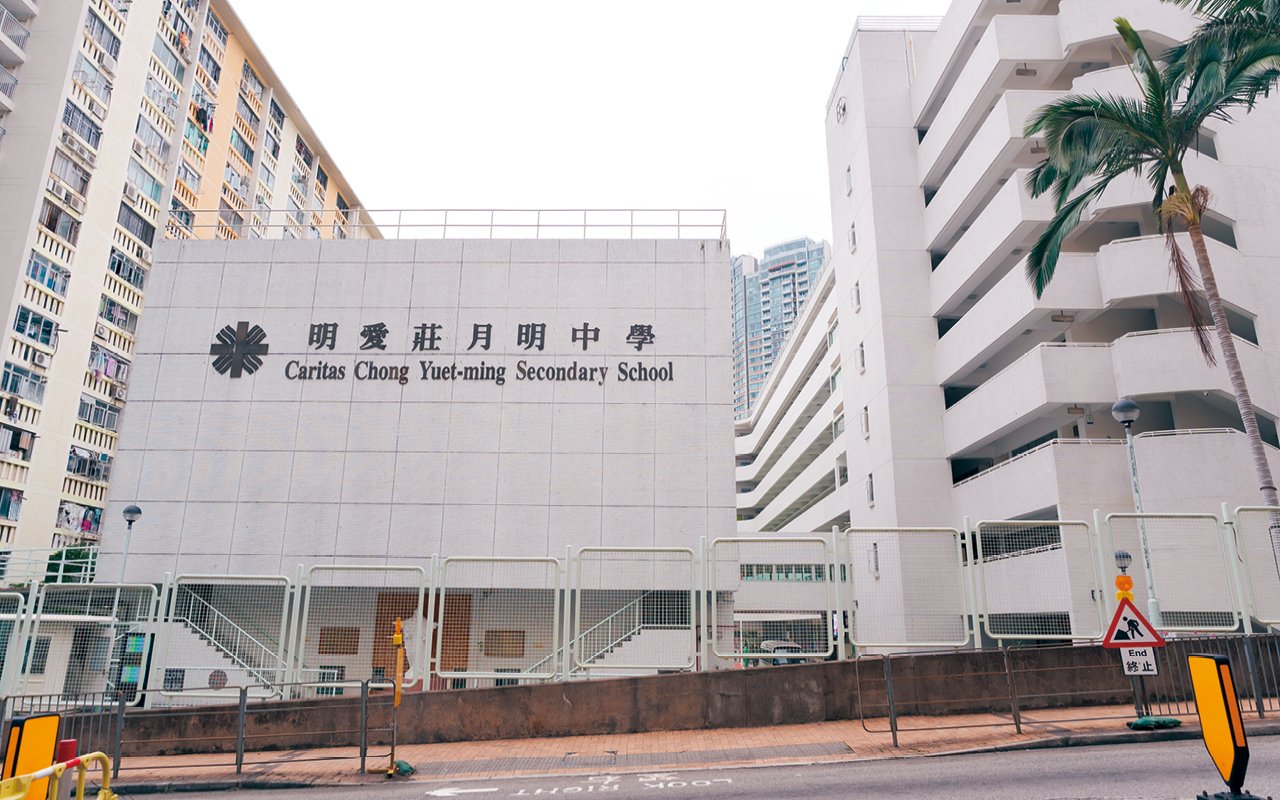
School building appearance




This English version is translated by AI. If there are inaccuracies or omissions, please refer to the original Chinese text.